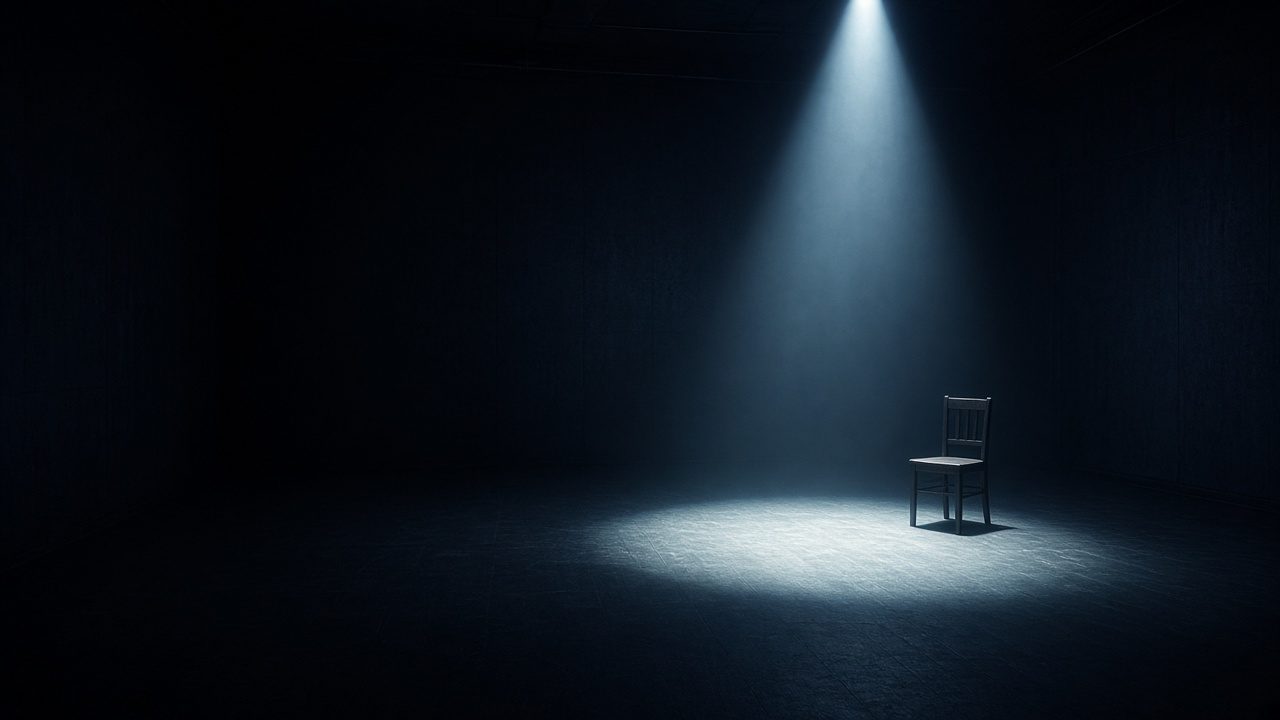
A room becomes a stage when the light finds someone.
The Spot Community looks at the quiet craft that turns a hall, a classroom or a back room into somewhere people watch together: a pool of light, a projected pattern, a well-timed fade.
Watch a room changeThe room and
the scene
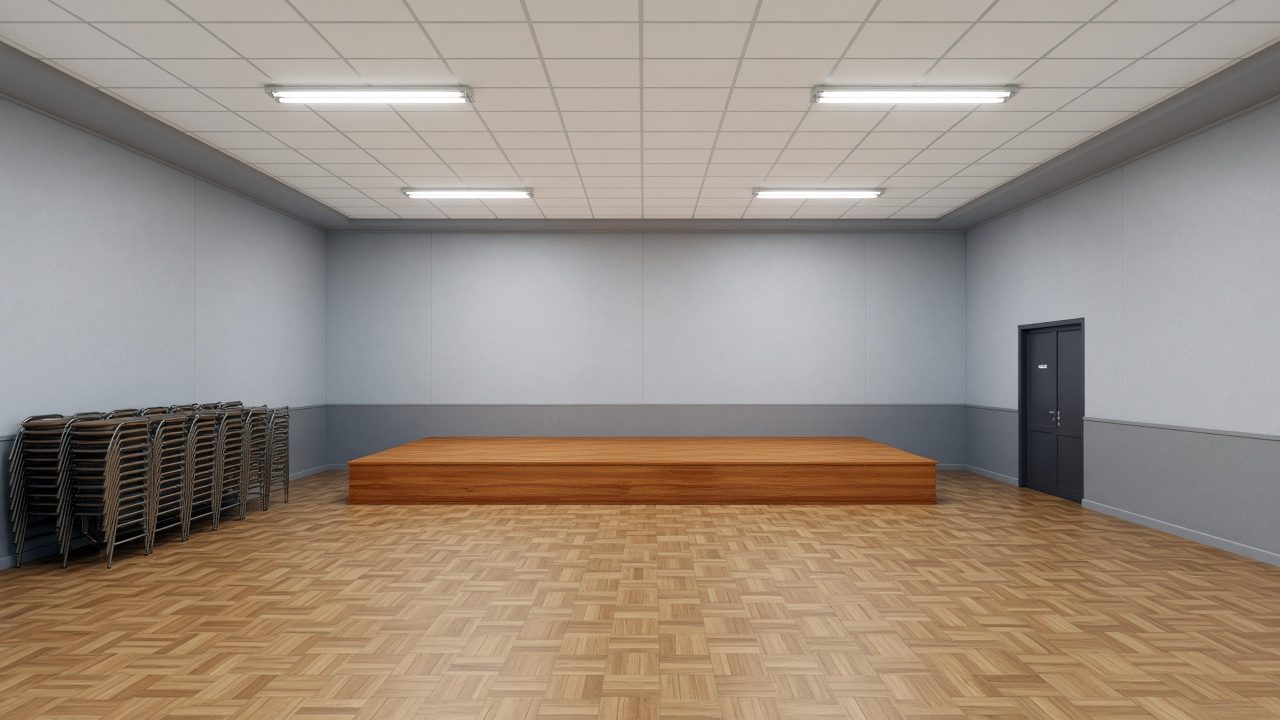
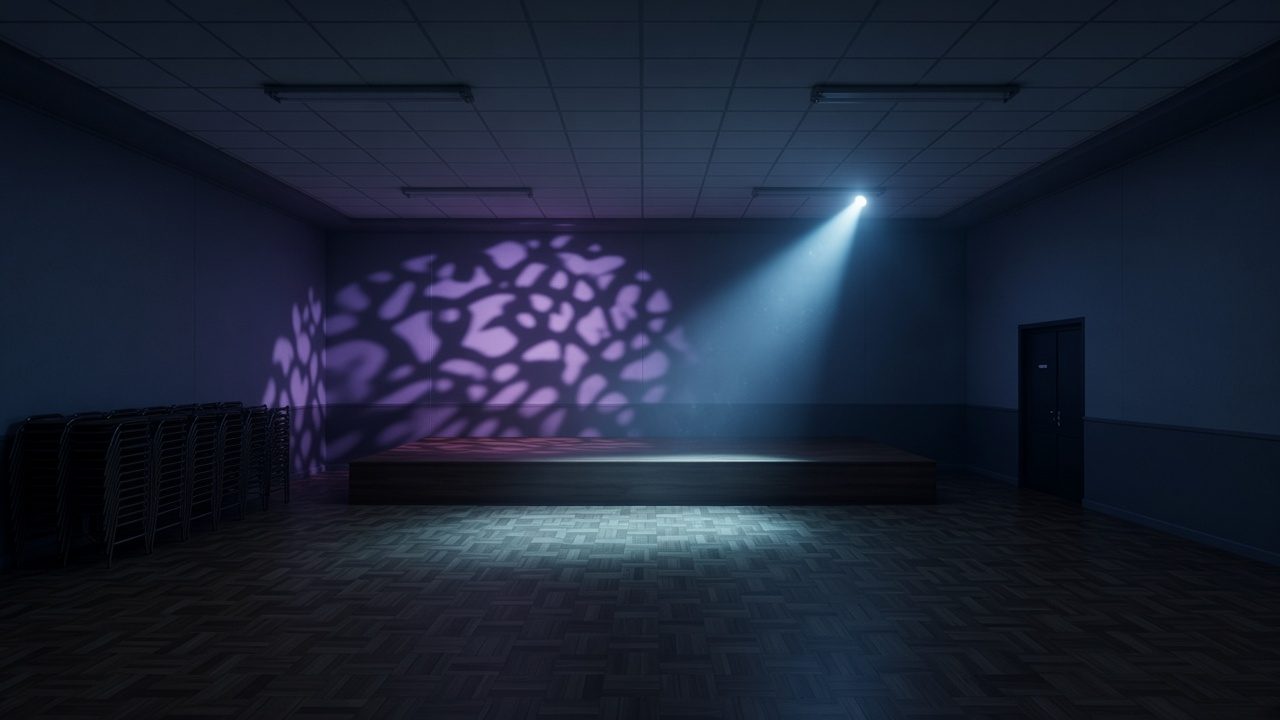
Nothing was rebuilt between these two views. The ceiling lights go out, one beam finds the platform, a pattern lands on the back wall, and the same plain hall starts to ask people to sit down and look one way.


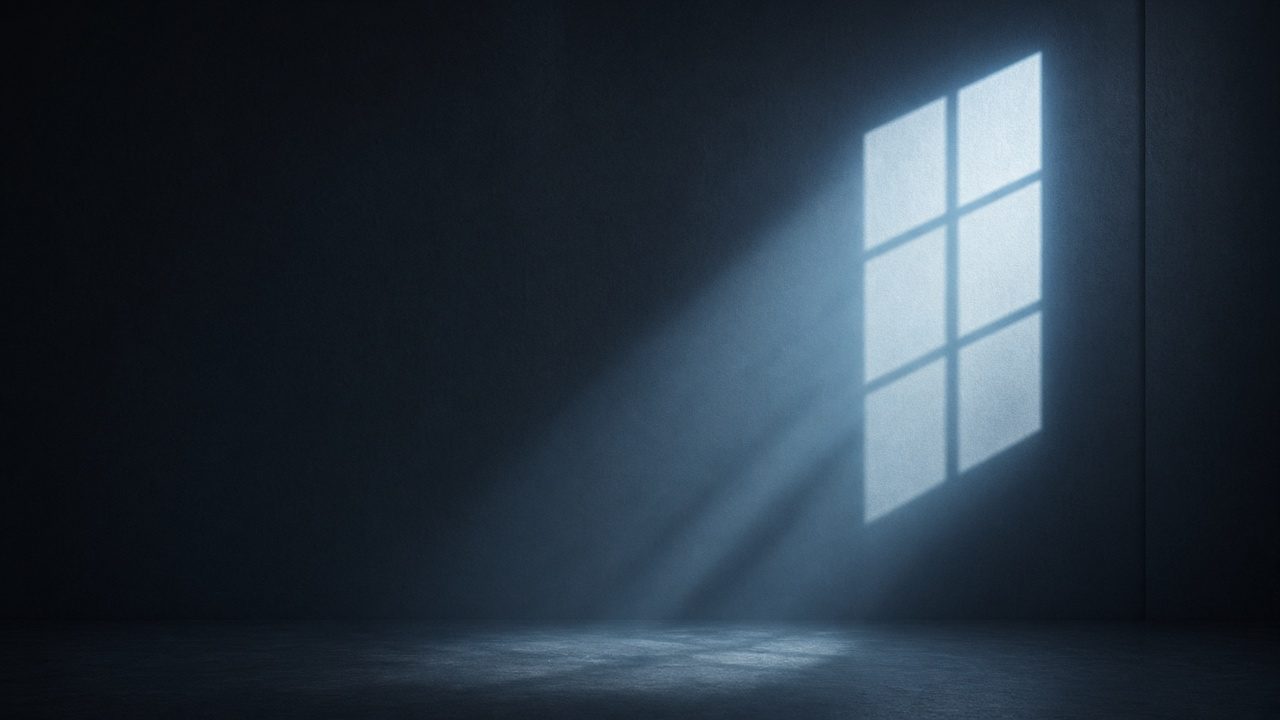
A wall learns
to be outside
A small metal pattern in front of a lamp is enough to put a window where there is only plaster. The audience supplies the morning beyond it. Most of the work happens in the dark half of the picture.
Read about patternsA table, two chairs,
three different hours
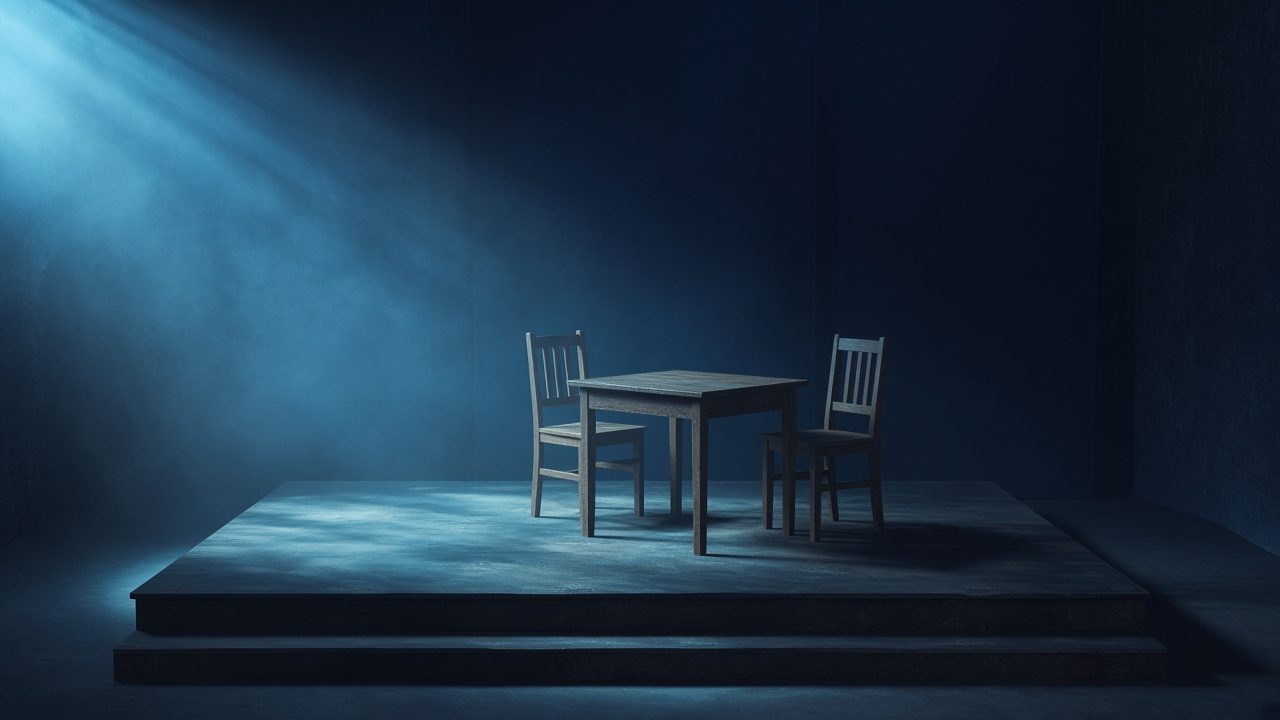
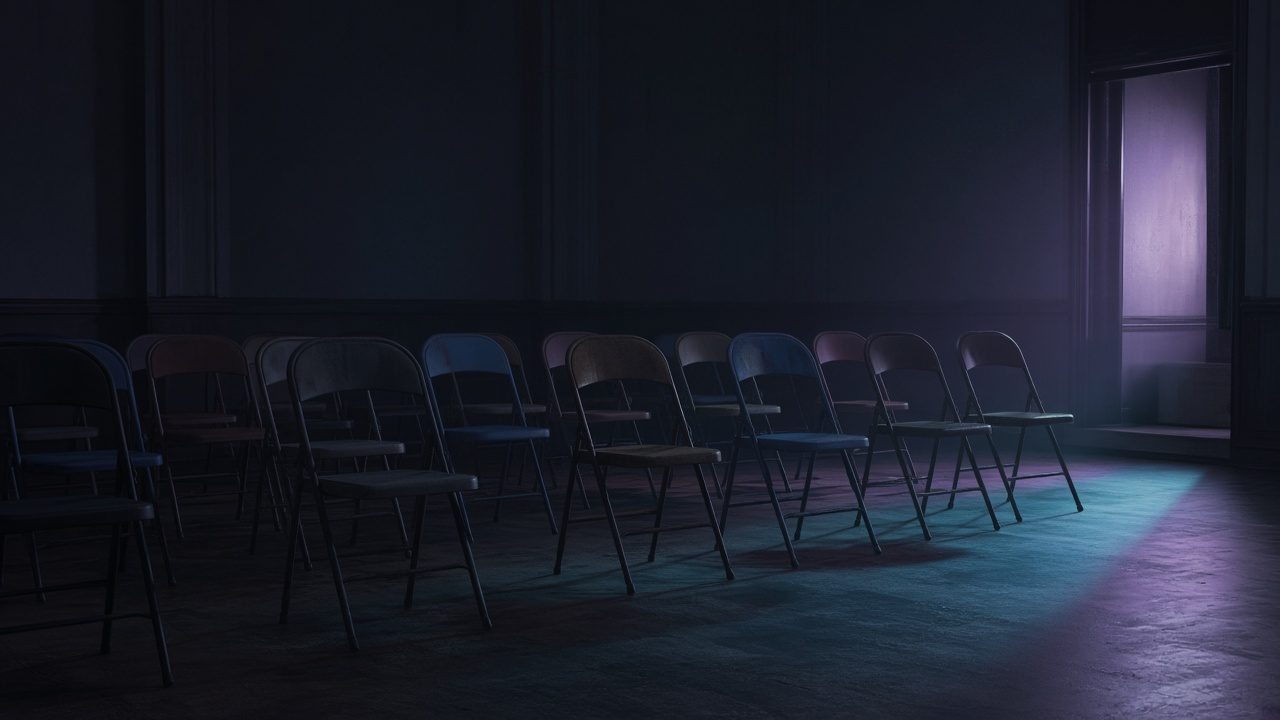
Low side light through haze. Long shadows stretch across the boards, and the chairs feel like they are waiting for someone who has not arrived yet.
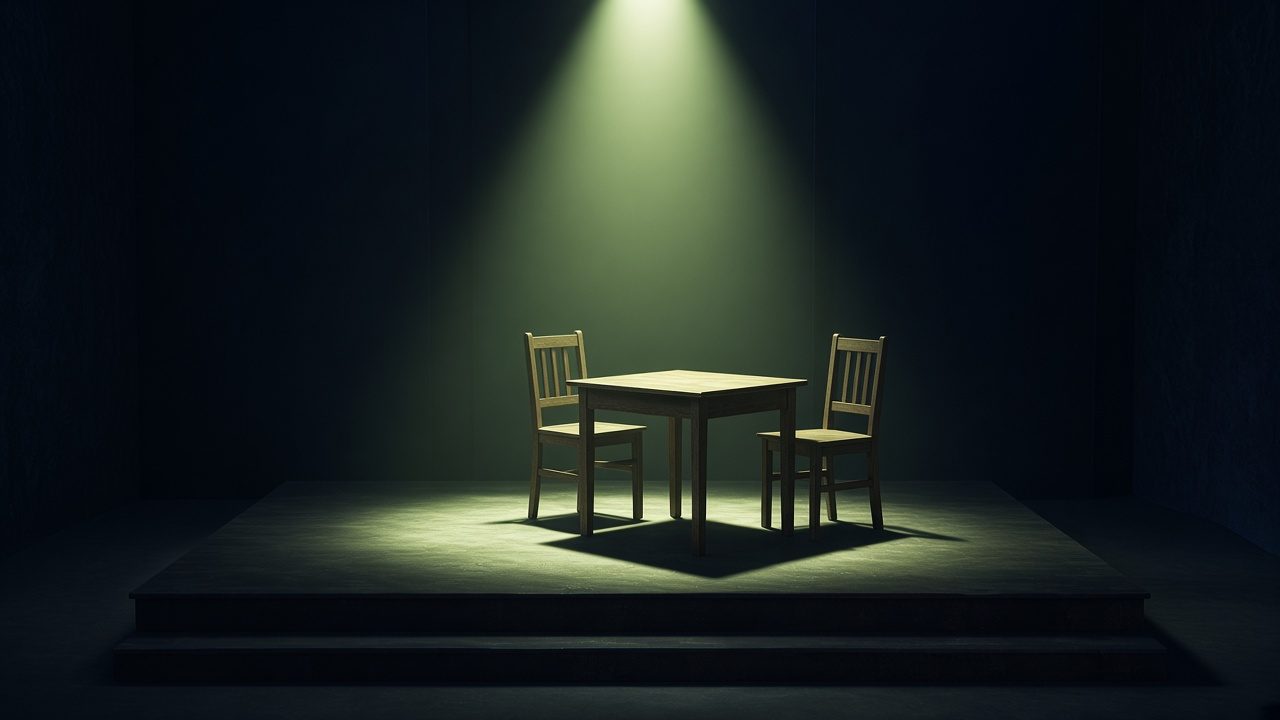
A single hard pool from overhead. Everything outside it disappears, so the table becomes the whole world and any conversation at it sounds closer.
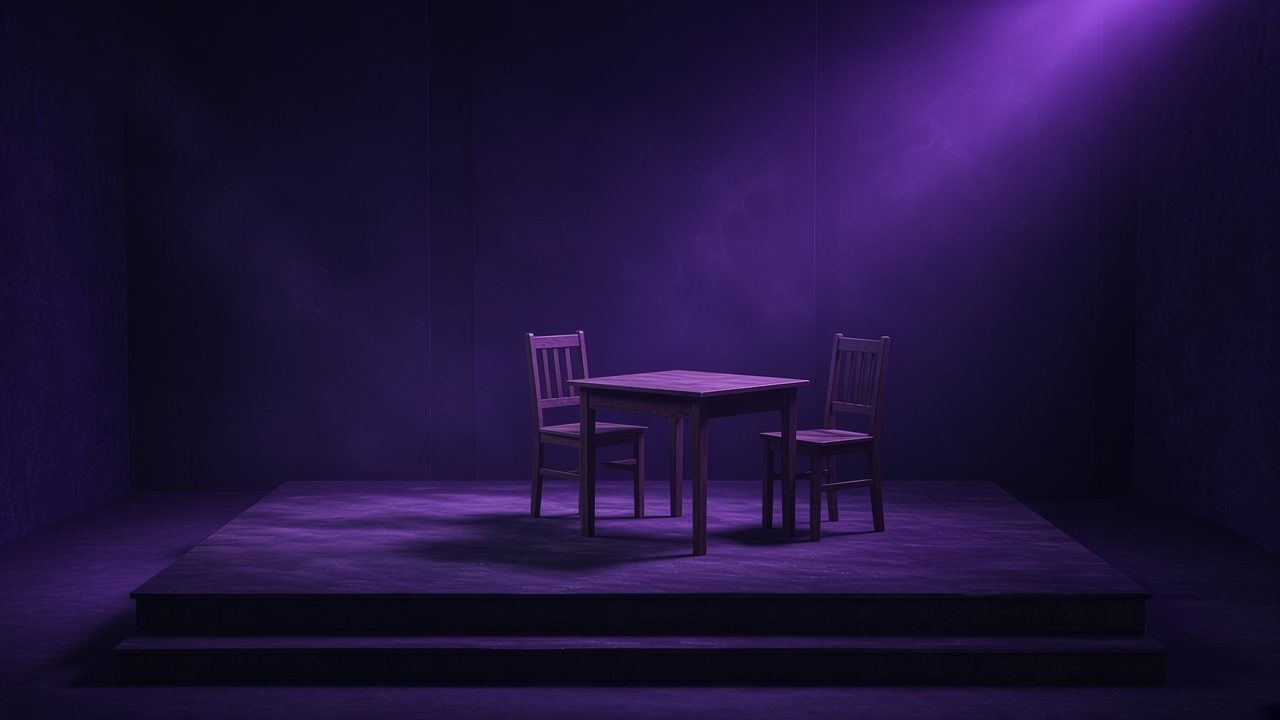
A violet wash from behind. Edges soften, the floor goes quiet, and the furniture reads as memory rather than as a place to sit.
Three ways to read
Patterns
Leaves, windows, water and broken glass: how cut shapes in front of a lamp turn bare surfaces into places, and why softer edges often feel truer.
Start with PatternsRooms
Halls, classrooms, courtyards and back rooms. Where people sit, where the light can hang and how the shape of a room decides what an audience can see.
Walk through RoomsCuecraft
The timing of a fade, the moment a colour shifts, the pause before a blackout. Small decisions that tell a room when to breathe.
Open Cuecraft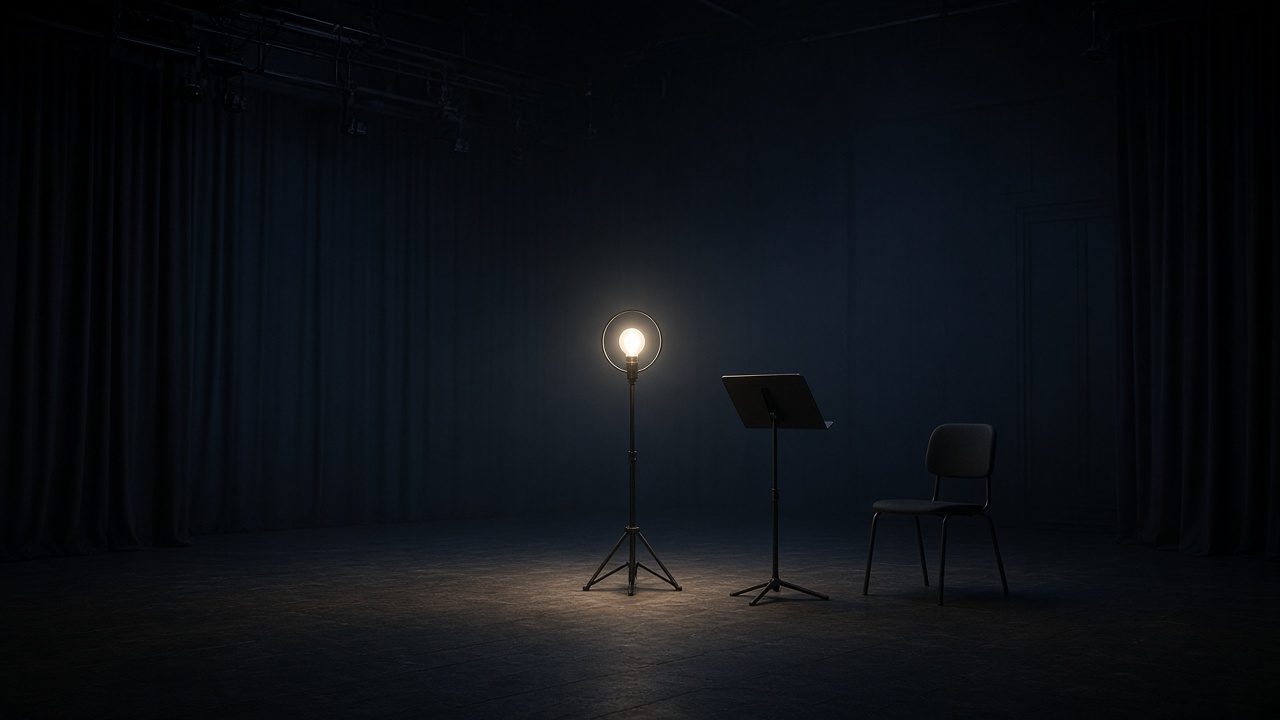
One bulb stays on
When the chairs are stacked and the doors are shut, a single lamp is left burning so the next person can find their way in. The rest of the reading lives here, kept the same way: quiet, plain and easy to find.
Read the Cue Stack