About
The Spot Community is an illustrated journal about how light, a shared room and a gathering of people turn into a small stage.
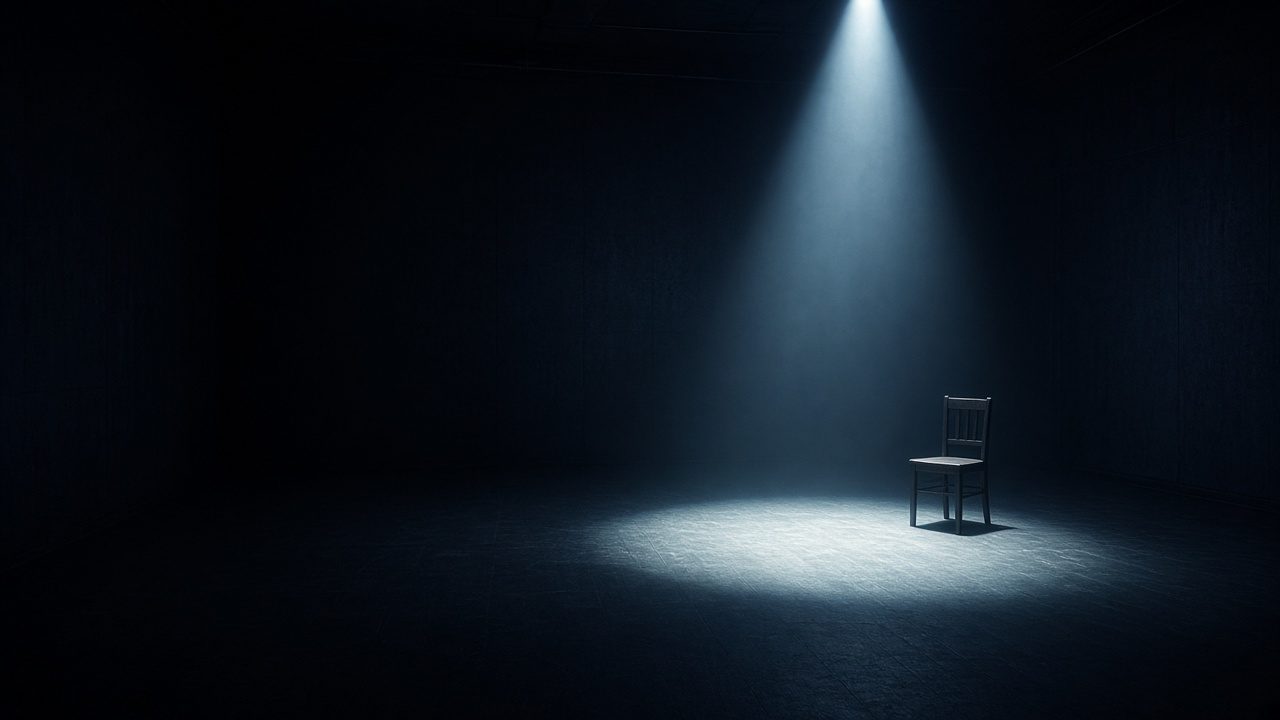
Before anyone enters
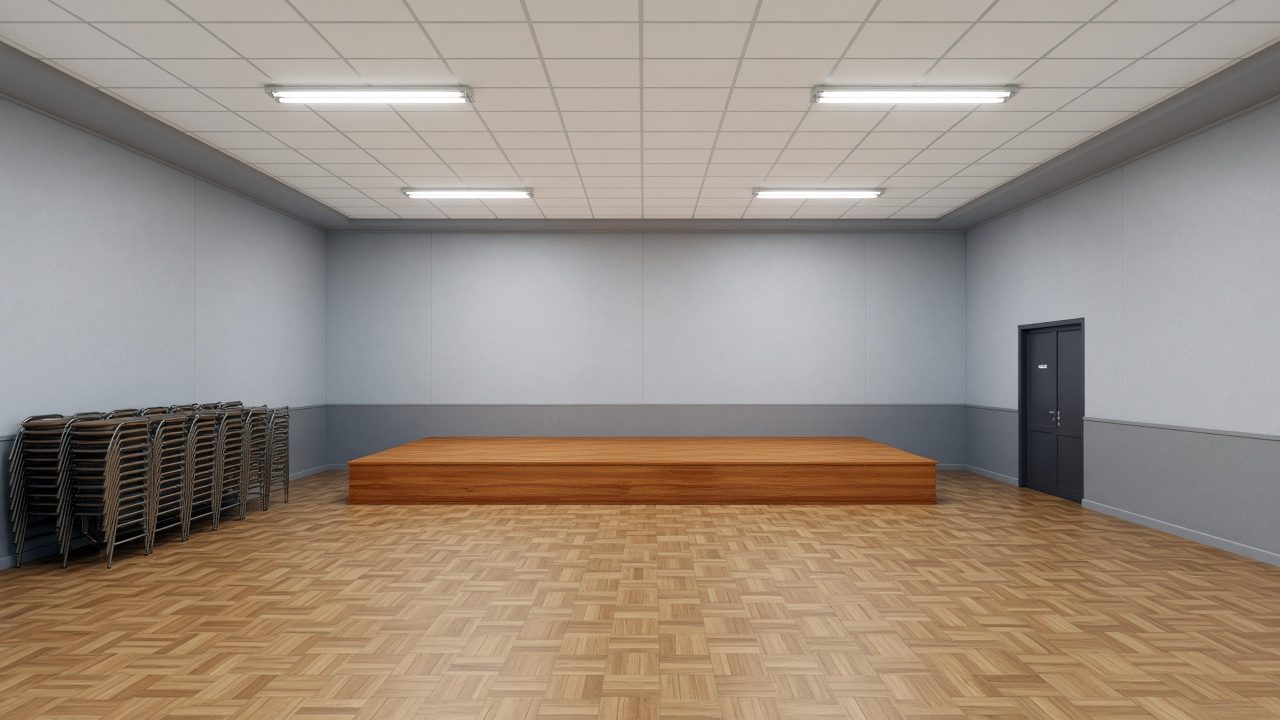
There is a moment in every borrowed room, before the chairs are set out, when it is only a room. The ceiling lights are on, the floor is scuffed, the piano is under a cover. Then somebody switches off the overheads, aims one lamp at the far end and puts a single chair in the pool of light. Nothing else has changed, yet everyone who walks in knows where to look and roughly how to behave.
The Spot Community is about that moment. It looks at the craft that makes small, shared stages possible: the patterns a spotlight can throw, the way an ordinary room holds an audience, and the timing of the changes that tell people when to breathe. The name joins the two halves. A gobo is the small cut plate that gives a beam its shape. To gather is what people do when they find a pool of light worth sitting around.
Three distances from the stage
Most of what is written here is seen from one of three places.
- The audienceThe seat farthest from the action, where light is not a technique but an experience: warmth, attention, a sense of time.
- The thresholdThe edge of the playing space, where the room ends and the scene begins, and where most small-venue problems hide.
- The light sourceThe lamp, the lens and the desk: what each one can and cannot do, explained plainly and without assuming a budget.
The essays move between these distances on purpose. A pattern only matters if someone in the back row reads it as morning. A cue only matters if it arrives at the right moment for the person on stage.
What a caption can prove
The pictures on The Spot Community are illustrations made for this site. They show imagined halls, tables and lamps, not real productions, venues or people, and every caption says so. They are there to make an idea visible, such as the difference between flat room light and one focused beam, not to document an event.
When a page refers to a technique, a piece of equipment or a tradition such as the ghost light left burning on an empty stage, it describes common practice as plainly as possible. Practice differs between countries, venues and companies, and the site does not claim that any one way is the only way. If you see an error, an unclear explanation or an image you believe has been misdescribed, the contact page is the place to say so. Corrections are made to the page itself.
Nothing here is a substitute for training, a qualified electrician or the safety rules of the building you are working in. The disclaimer says more about that.
Leave the room ready
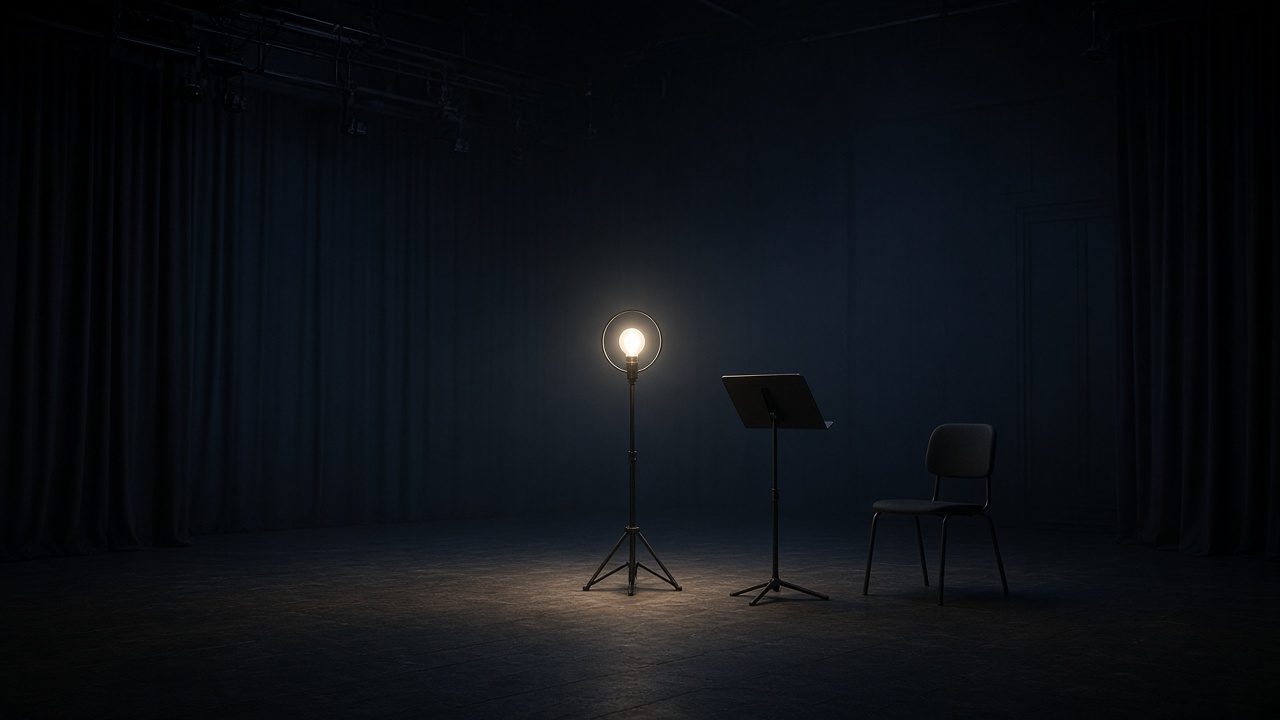
Theatre people have a habit of leaving one light on when they go. Whatever the stories about it, the practical reason is simple: the next person to walk into the dark should be able to see. The Spot Community tries to work the same way. The writing aims to be quiet, plain and easy to come back to, so that someone setting up a school play, a reading in a library or a concert in a church hall can find what they need and get on with the evening.