Cuecraft
The timing of a fade, the moment a colour shifts, the pause before a blackout. Small decisions that tell a room when to breathe.
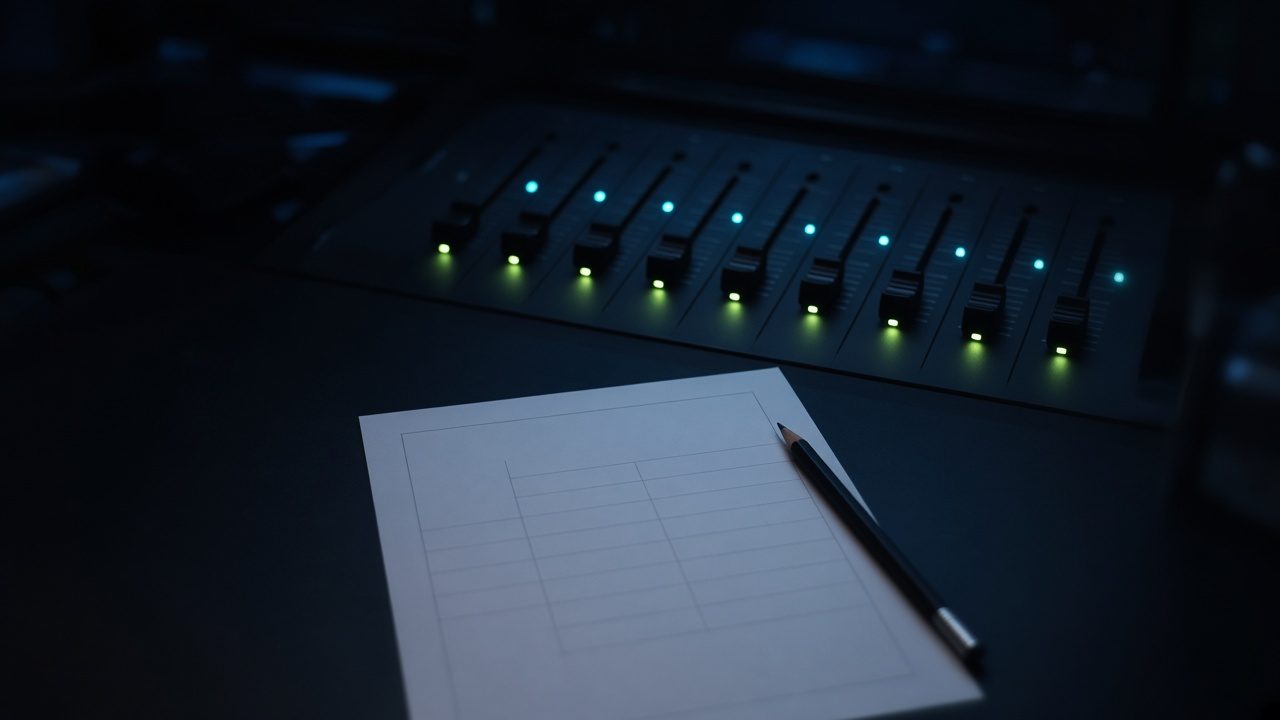
A cue is a planned change. In lighting, it is usually a move from one state of the lights to another, written down with a number and a time so that it happens in the same way every performance. The audience never sees the cue sheet. They only feel that the room grew warmer as a character remembered something, or that the darkness at the end of a scene arrived exactly when it should.
States and moves
It helps to think of lighting as a series of still pictures, called states, and the cues as the moves between them. Each state answers a simple question: what should the audience be able to see now, and how should it feel? Each cue then answers another: how should the room get from that feeling to the next one? A cue that only changes brightness is quite different from one that also shifts colour or direction, even if both take the same three seconds.
Time is the main tool
The same change can mean very different things depending on how long it takes. A snap, with no fade at all, is a jolt: a door flung open, a memory that interrupts. A fade of two or three seconds is the ordinary breath between moments. A fade of twenty or thirty seconds can be almost invisible, so that the audience realises only afterwards that evening has fallen. Many designers give the outgoing light and the incoming light slightly different times, which can make a transition feel more natural than a single straight cross-fade.
The best cue is often the one nobody can point to, but everybody felt.
Calling the cue
In most productions, someone else decides when a cue runs. A stage manager watches the performance and gives a standby, then a “go”, tied to a precise moment: a line, a gesture, a sound, a footstep onto a mark. In a small show, the person operating the desk may also be the one calling it. Either way, the cue sheet records the trigger as well as the number, because “after the line” and “on the line” are different cues.
Colour as a cue
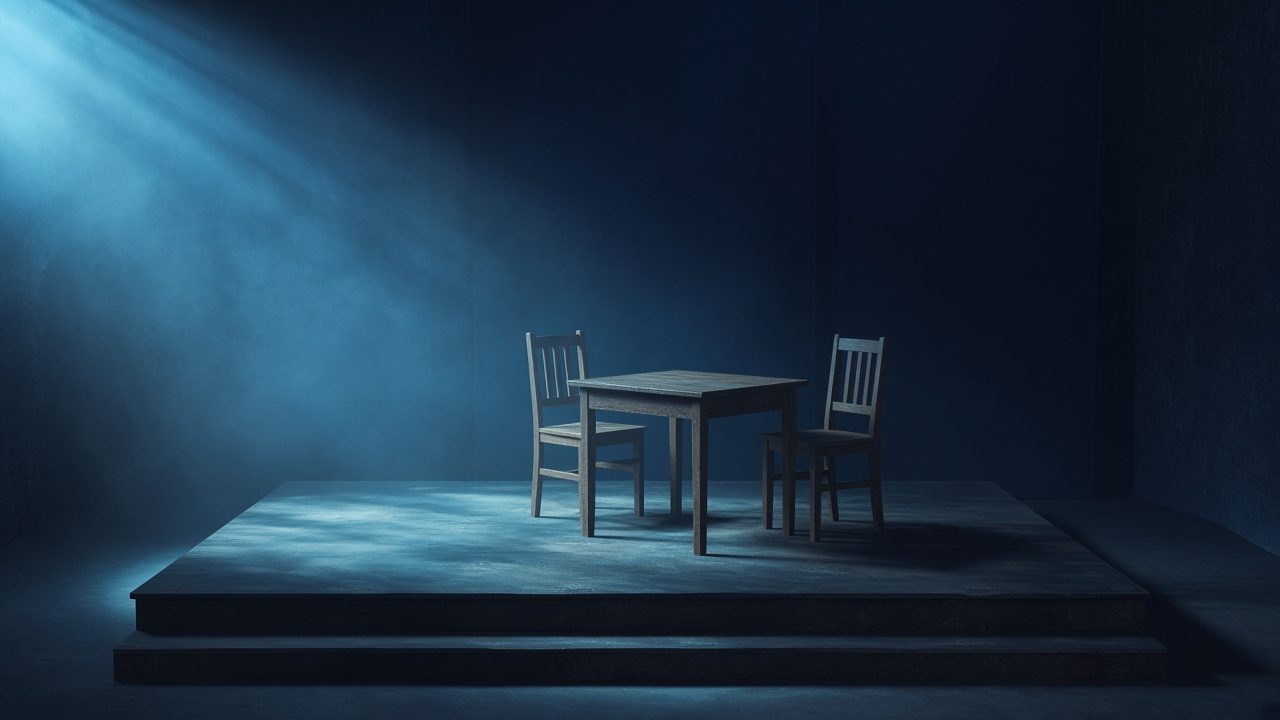
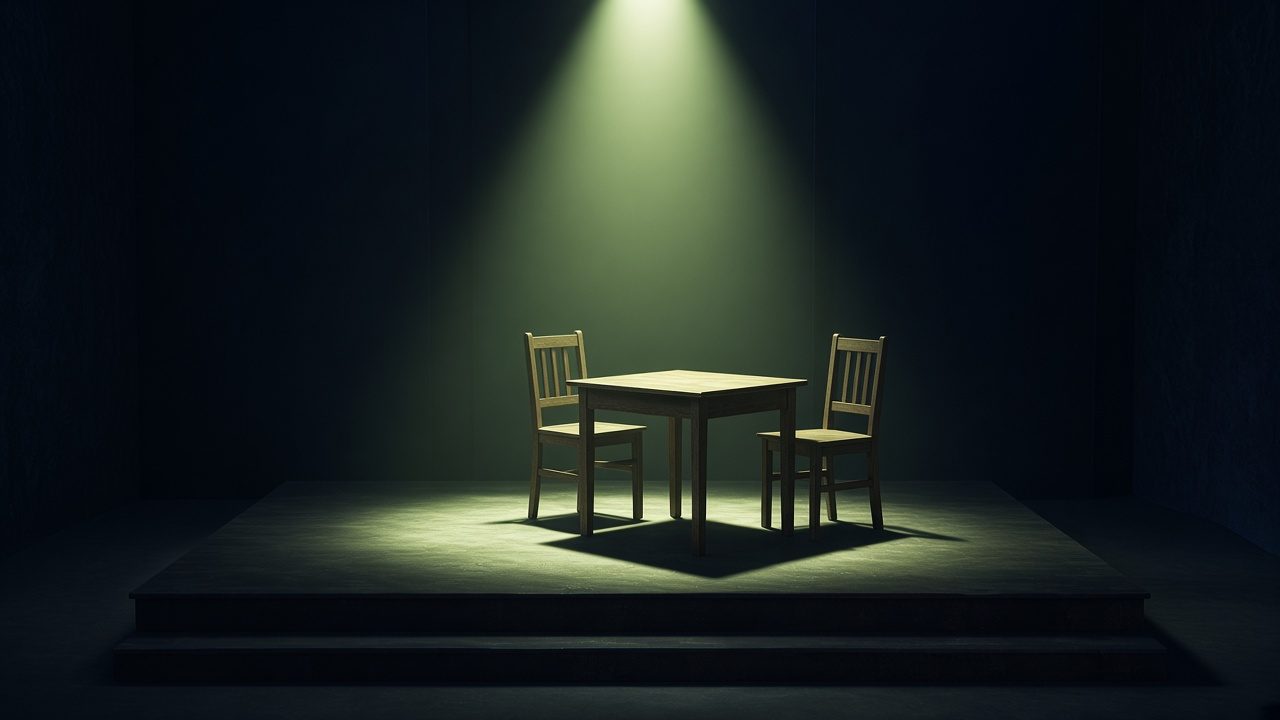
Colour on stage traditionally came from gels: sheets of coloured heat-resistant film placed in front of a lamp. Many LED fixtures now mix colour electronically, which means colour can change within a cue rather than being fixed for the evening. That freedom is easy to misuse. A small shift, a little cooler or a little warmer, often carries more meaning than a dramatic swing, because the audience reads it as a change in time or temperature rather than as a lighting effect.
Blackouts and the dark between
A full blackout is a strong statement and, in a small room, a practical one too: performers and audience need to be safe in the dark, and exit signs and emergency lights stay on. Many scenes end better in a fade to a low glow than in total darkness. When a true blackout is used, its length matters as much as any fade. A half-second is a full stop; four seconds is a held breath.
Writing a cue sheet that someone else can run
- Number cues in order, and leave gaps (10, 20, 30) so that new cues can be inserted later.
- Write the trigger in words, not just the page number.
- Record the time of each fade, and any separate time for lights going out.
- Add a short note of intention: “evening falls”, “focus to the letter”. It helps whoever runs the show next.
Cues only work in a room that has been understood. Read Rooms for that, or Patterns for the shapes a cue can bring in.