Rooms
Halls, classrooms, courtyards and back rooms. Where people sit, where light can hang and how the shape of a room decides what an audience can see.
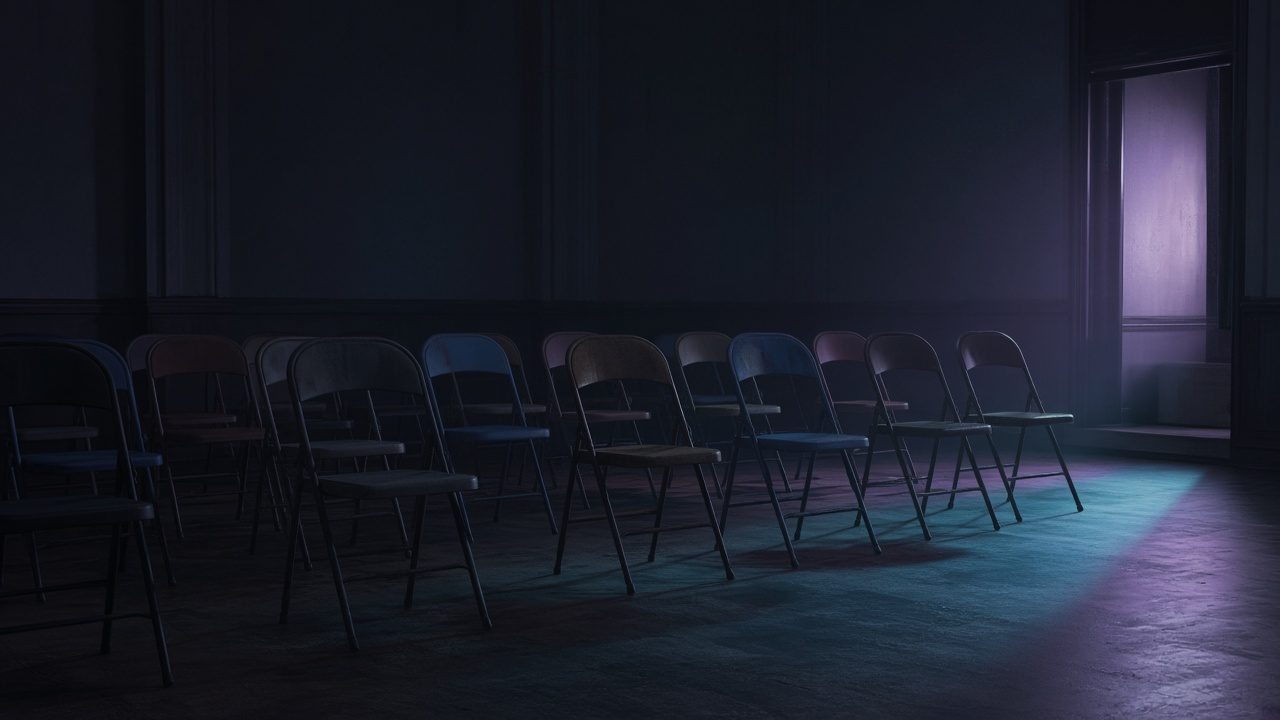
Most small performances do not happen in theatres. They happen in parish halls, school gyms, library basements, café back rooms, courtyards and the function room above a pub. None of these spaces was built for watching. Each one already has its own light, its own sightlines and its own habits, and the first job of anyone lighting there is to understand the room before adding anything to it.
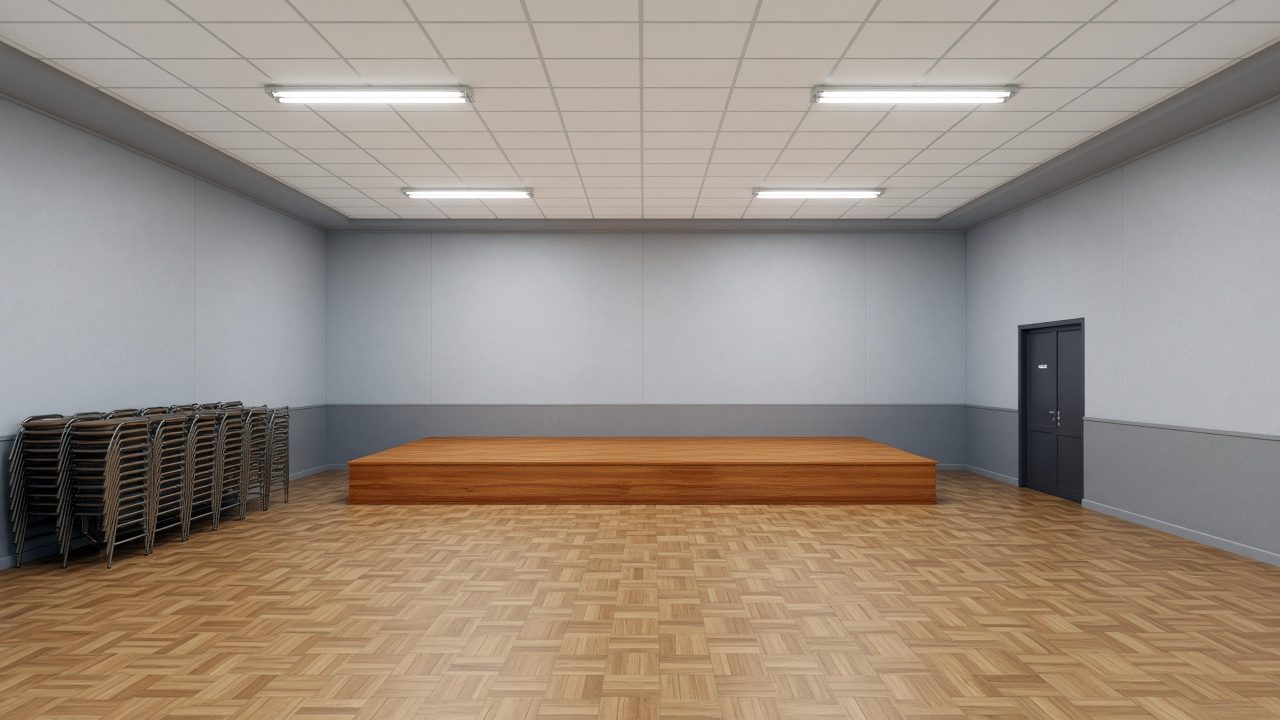
Start with where people sit
An audience arrangement is a decision about light. In an end-on layout, everyone faces one direction and the performers can be lit mostly from the front and sides. In the round or in a thrust, someone is always looking towards a lamp, so light has to come from more angles and higher up to keep it out of people’s eyes. In a traverse, with the audience on two long sides, each half of the room is lit as if it were the other half’s background. Before choosing a single fixture, stand in the worst seat and the best seat and look at what each can see.
Where the light can hang
In a theatre, there are bars and pipes over the stage. In a hall, there may be nothing but a suspended ceiling, a beam, a balcony rail or a pair of stands. The available positions decide the angles that are possible, and the angles decide the mood. Light from a low front position flattens faces and throws big shadows on the back wall; light from high and to the side sculpts faces and keeps the wall dark. If the only safe position is on stands at the front, the honest answer is often fewer, better-placed lamps rather than more of them.
Hanging anything over people’s heads is a job for someone competent, using equipment rated for the load, with a secondary safety cable on every fixture, and with the building owner’s permission. Gobo & Gather describes how rooms behave; it is not rigging instruction.
The room’s own light
Every borrowed space comes with house lights, exit signs, windows and the glow of a kitchen hatch. Some can be switched off; exit signs and emergency lighting must not be. Good small-room lighting usually accepts those fixed glows and designs around them, for example by keeping the stage brighter than the exit sign so the eye settles where it should. Daylight is the biggest variable of all. A matinee in a room with tall windows is a different show from the same piece at nine in the evening.
Walls, floors and what they reflect
A white-painted hall bounces light everywhere, so even a tight spotlight fills the room with a soft glow. Dark walls, curtains and wooden floors absorb it, so a small amount of light goes a long way. Shiny floors throw a second, upside-down image of every lamp. Before deciding a room is too bright or too dark, notice what the surfaces are doing. Sometimes a length of black fabric over one reflective wall does more than another fixture would.
Power and patience
Small venues rarely have dedicated stage power. Lighting may share circuits with the urn, the heaters and the PA. LED fixtures have made small-room lighting far more practical because they draw much less power and run cooler, but the building’s circuits, cables and sockets still need to be checked by someone who knows how. A lighting rig that trips the hall’s breaker at the start of the second act has not lit anything.
Three questions for any room
- Where will people look when nothing is happening? That is where the room already wants the stage to be.
- What can be made darker, not just what can be made brighter?
- What will be different when the room is full of people, coats and warm air?
Once the room is understood, patterns can give it a sense of place and cues can give it time.