Patterns
A small cut shape in front of a lamp can put leaves, a window or moving water onto a bare wall. Here is how that works, and why softer edges often feel truer.

Most of what an audience remembers about a lit room is not the light itself but the shape it makes when it lands. A beam on its own is a circle. Put something in its path and the circle becomes a window frame, a canopy of leaves, the ripple of water under a pier or the long bars of a staircase rail. That something is usually called a gobo: a thin plate with a pattern cut through it, slipped into a spotlight so that the lamp projects the shape rather than just a disc.
Where the pattern sits
A gobo only works in a fixture that can focus an image. In a profile or ellipsoidal spotlight, light from the lamp is gathered by a reflector and squeezed through a narrow opening called the gate. Lenses in front of the gate then project whatever is in that opening onto the wall or floor, a little like a slide projector. A pattern placed in the gate is reproduced, upside down and back to front, wherever the beam lands. A simple wash fixture, by contrast, has no gate and no imaging lens, so a pattern held in front of it just casts a vague shadow.
The gate is also the hottest part of the instrument. That is why most patterns are etched steel, which tolerates heat, and why more detailed glass patterns are made from heat-resistant glass. Anyone fitting one should use the holder made for that fixture, wait until it has cooled and follow the maker’s instructions.
Sharp or soft
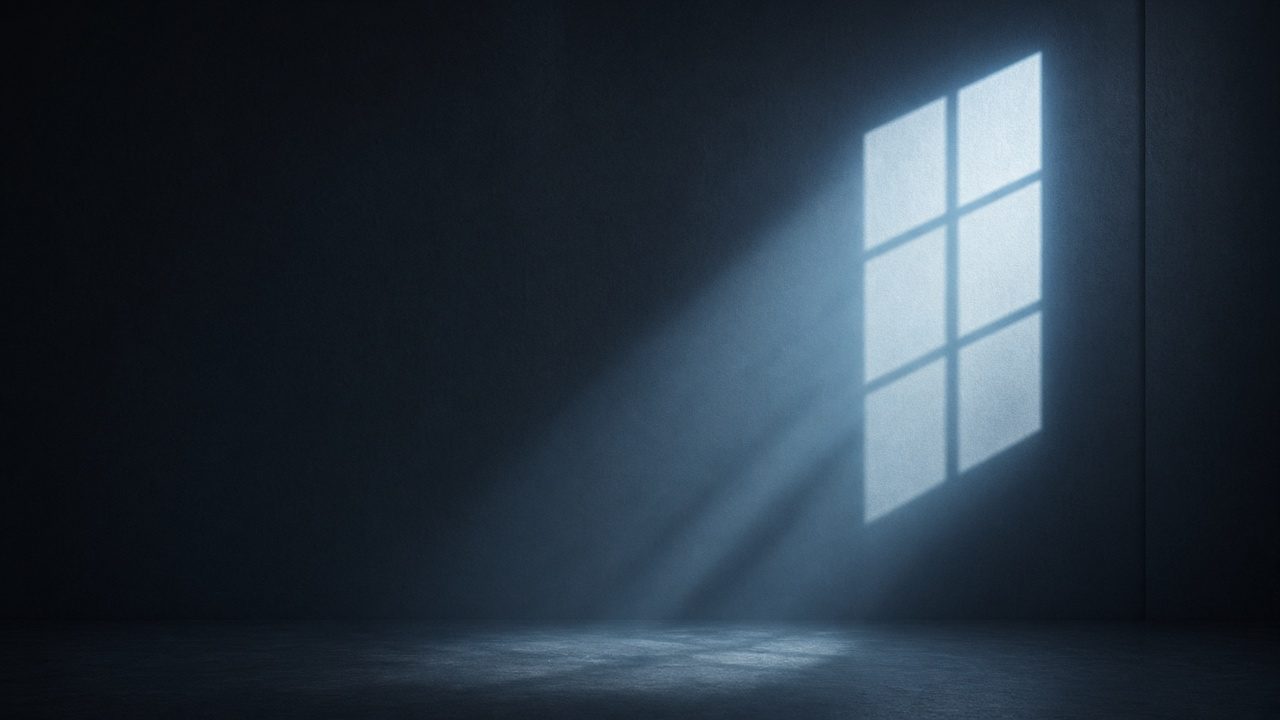
Turning the lens barrel moves the image in and out of focus. A pin-sharp pattern looks graphic and deliberate: a logo, a sign, a hard-edged frame. A slightly softened one reads more like nature, because real dappled light through leaves or a curtain is never perfectly crisp. Many designers deliberately back the focus off until the edges just begin to blur. The pattern stops announcing itself and starts behaving like a place.
A good pattern is noticed second. First the audience feels it is morning, or that there are trees overhead.
Breaking up a flat surface
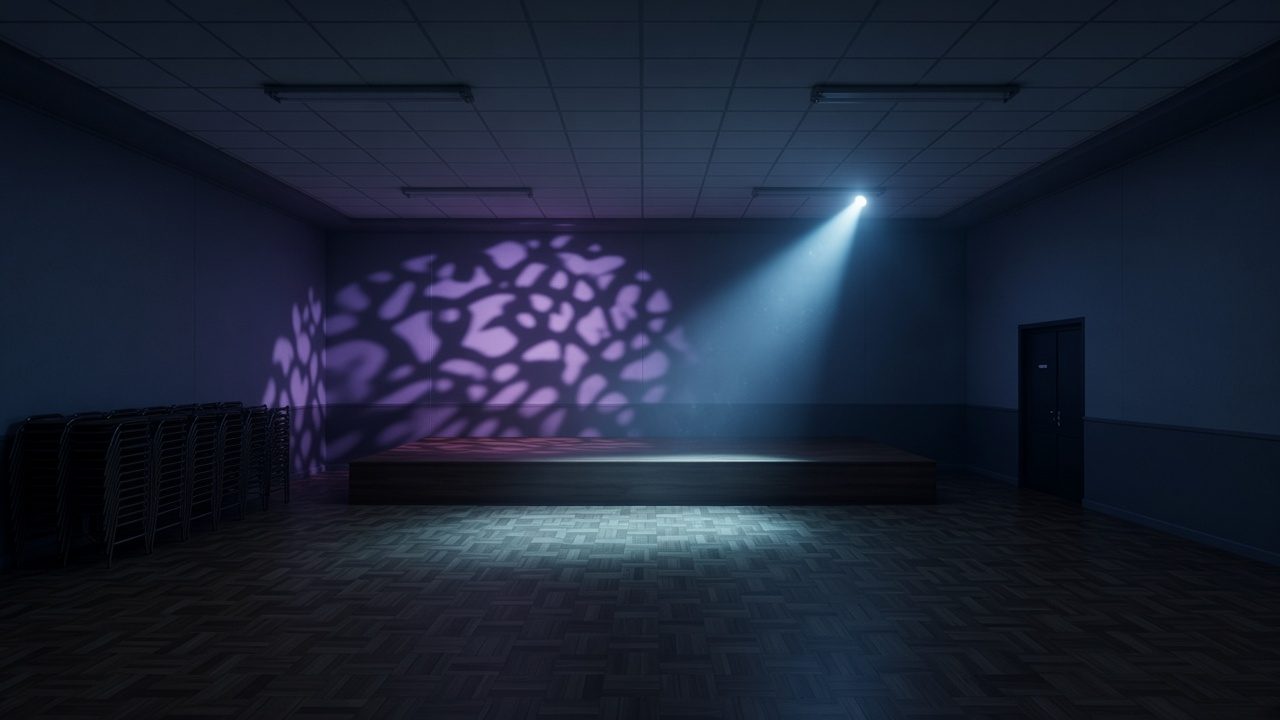
Some of the most useful patterns do not depict anything. Broken, cloud-like or speckled designs, often sold as “breakups”, scatter a beam into irregular patches. On a plain floor or back wall they add texture without telling a story, which can make an empty stage feel less like a lit box and more like somewhere air moves. Two breakups from different angles, slightly out of focus and in different colours, can make a flat wall look as if it has depth.
Haze, and the shape in the air
A pattern shows on the surface it lands on. In clean air the beam between lamp and wall is almost invisible. Add a light haze and the pattern appears as shafts through the space itself, so a window pattern becomes visible as a column of light crossing the room. Haze changes how a space feels, but it is also the point where a small venue has to think about smoke detectors, ventilation and anyone in the audience with breathing difficulties, and about what the hall’s own rules allow.
Moving patterns
Patterns do not have to sit still. A rotating holder can turn one slowly; an effects wheel can drift a second plate across the first so that water ripples or flames flicker; many modern moving lights carry a set of patterns that can be swapped or spun on a cue. Movement is powerful and easily overdone. A slow drift that the audience only notices after a minute usually tells them more than a fast spin they notice at once.
Making your own, carefully
Hand-made patterns from thin metal foil, such as the inside of a food tin or a disposable baking tray, are a long-standing low-budget tradition in school and community theatre. The same caution applies: only use material that will not burn or melt at the gate, make it the size the holder expects, never improvise inside a lamp that is switched on, and remember that paper, card and plastic film do not belong in the gate at all.
Reading a pattern on stage
- Ask what time of day it suggests. Long, stretched shapes usually read as low early or late sun; short, compact shapes read as overhead.
- Look at the edge. Hard edges feel designed; soft edges feel found.
- Notice where it falls. Patterns on the floor tend to describe a place; patterns on a back wall describe an outside world beyond it.
- Check whether it moves. If it does, ask whether the movement has a reason in the story.
Next, see how the shape of the room decides where any of this can hang, or how a cue brings a pattern in and out.